
Roomote Tutorial: Deploy Your Roo Code Cloud Agent
Roo Code shut down on May 15, 2026. Roomote is the cloud coding agent its creators moved to — this illustrated walkthrough takes you from zero to your first reviewed pull request, built entirely on official material.
TL;DR
- Roo Code's VS Code extension, Roo Code Cloud and Router shut down on May 15, 2026; the same team now builds Roomote, a cloud coding agent you deploy in minutes and actually own.
- Roomote takes tasks from Slack, Teams, Telegram, Discord or its Web UI, clones your repo into a throwaway sandbox, writes the code, runs the tests and opens a pull request with screenshots and a live preview URL.
- Deploy in about two minutes on Roomote Cloud (free 7-day trial, no credit card) or self-host free for up to 10 users with a one-line installer — Coolify and Fly.io guides included.
- You bring the models: connect a ChatGPT subscription or API keys from OpenRouter, Anthropic, OpenAI, Moonshot Kimi, Z.AI and more, with no markup on tokens.
Roomote — official GitHub repository
Official repository:RooCodeInc/Roomote
Roo Code pivots to cloud-based agent, says IDEs aren’t the future of coding
Reporting:The New Stack · Paul Sawers · Apr 22, 2026
Every image on this page comes from official material: the Roomote repository, the product demo footage on roomote.dev, and public pages, credited in the source links above. Nothing here is staged or third-party screen capture.
Imagery: official Roomote README, roomote.dev demo videos and public pages — sources credited above. The walkthrough text is original to this site.
From shut-down extension to your first Roomote pull request
- 1
See what happened to Roo Code
On April 21, 2026 the Roo Code team announced the sunset of the whole suite: the VS Code extension, Roo Code Cloud and the Router service went offline on May 15, 2026, and unused paid balances were refunded. The GitHub repository now shows a read-only archive banner. Roughly 3 million installs had to find a next step — and the same team had already shipped it.
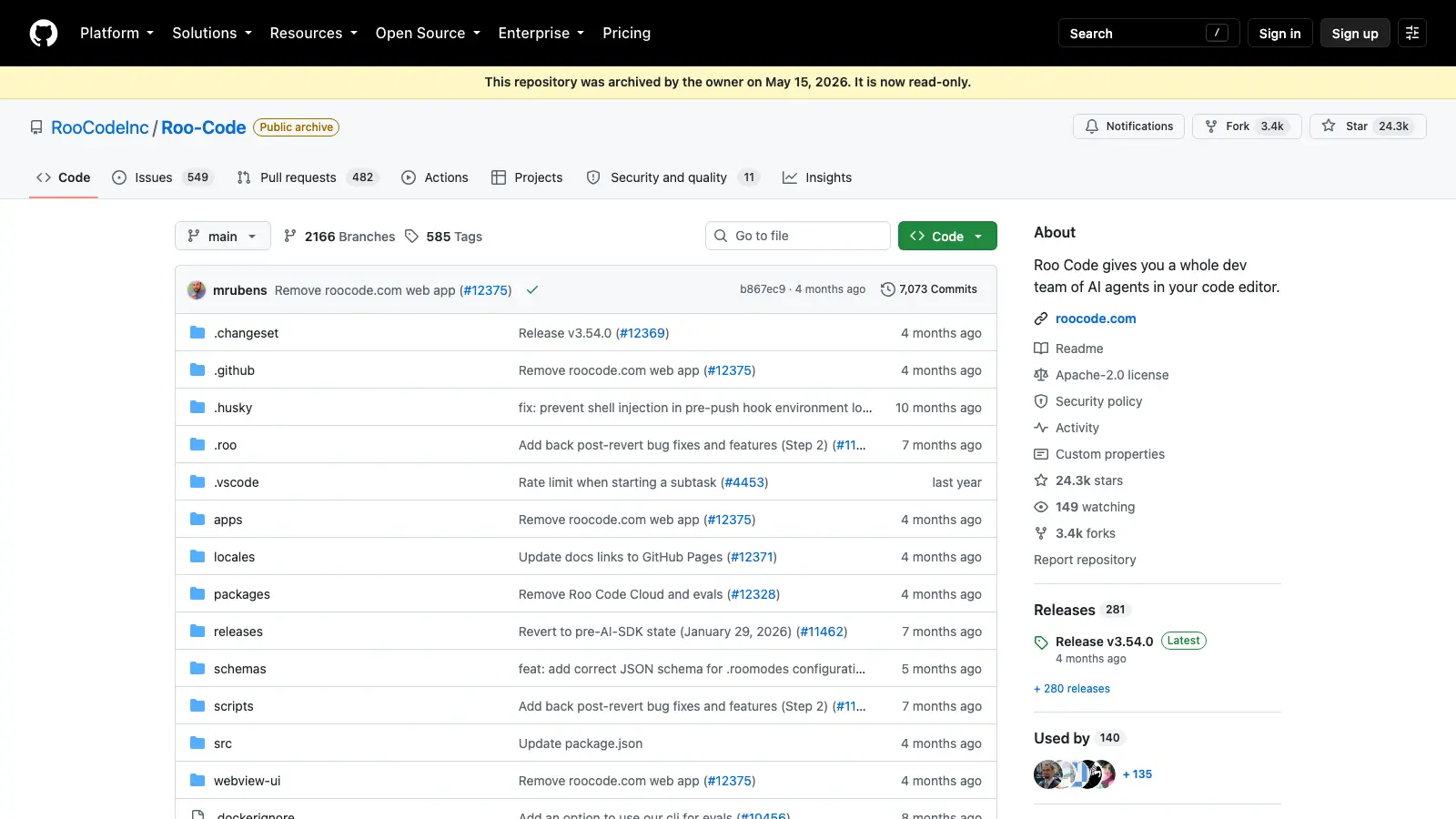
The RooCodeInc/Roo-Code repository was archived and made read-only on May 15, 2026. - 2
Meet Roomote, the same team's cloud agent
Roomote is a full-stack application, not an editor extension. You hand it a task in Slack, Teams, Telegram, Discord or the Web UI; it clones your repo into an isolated sandbox, writes the code, runs the test suite, takes screenshots and opens a pull request you review like any teammate's. That is the whole pitch: a cloud coding agent you deploy in minutes and actually own.
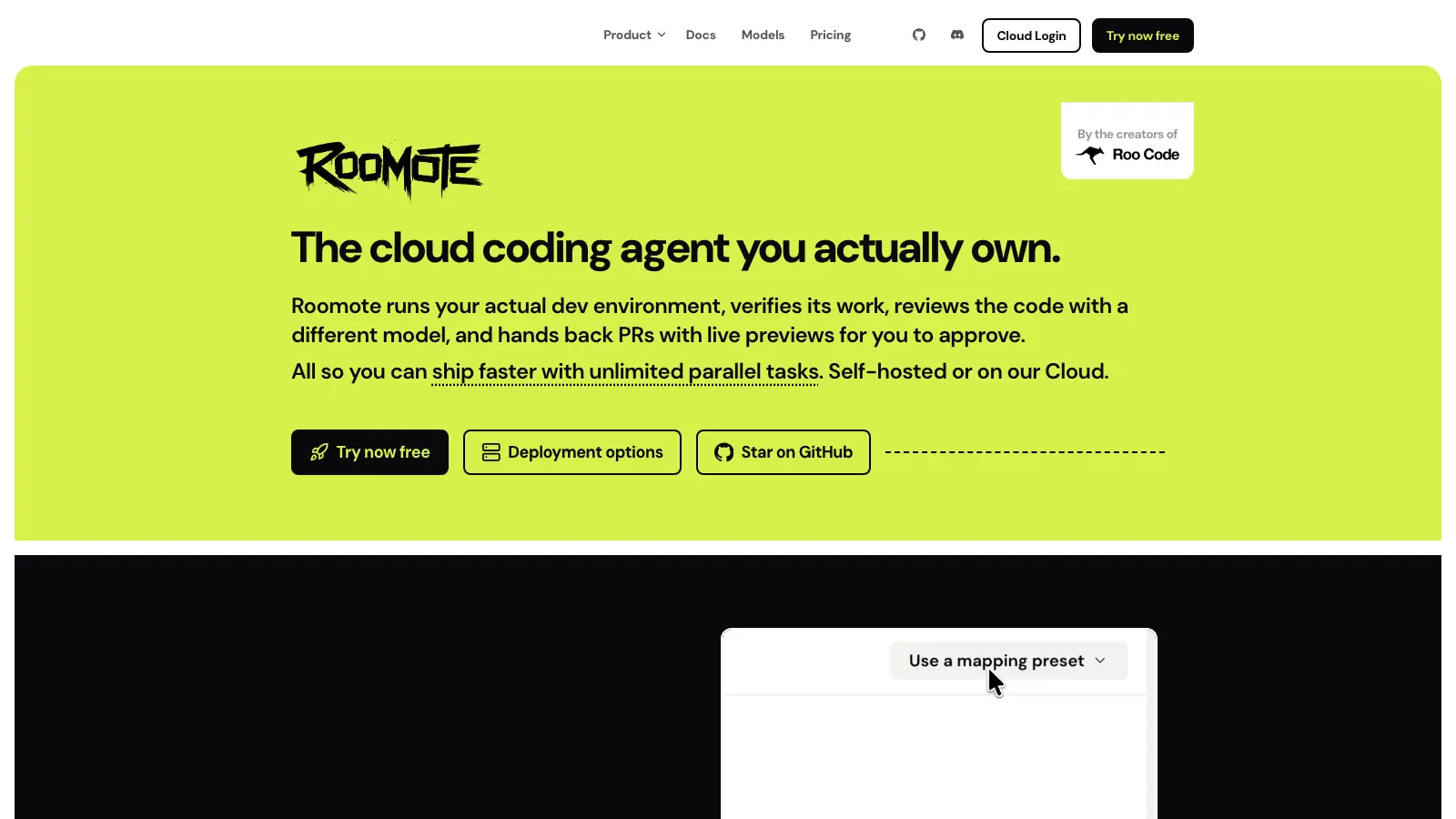
Roomote's homepage: the cloud coding agent you actually own, by the creators of Roo Code. - 3
Deploy the hosted Cloud in about two minutes
The fastest path is cloud.roomote.dev: sign up with Google or email and you get your own single-tenant instance — the same product as self-hosting. The trial runs seven days free without a credit card, and you can move to your own server at any time, so trying it commits you to nothing.
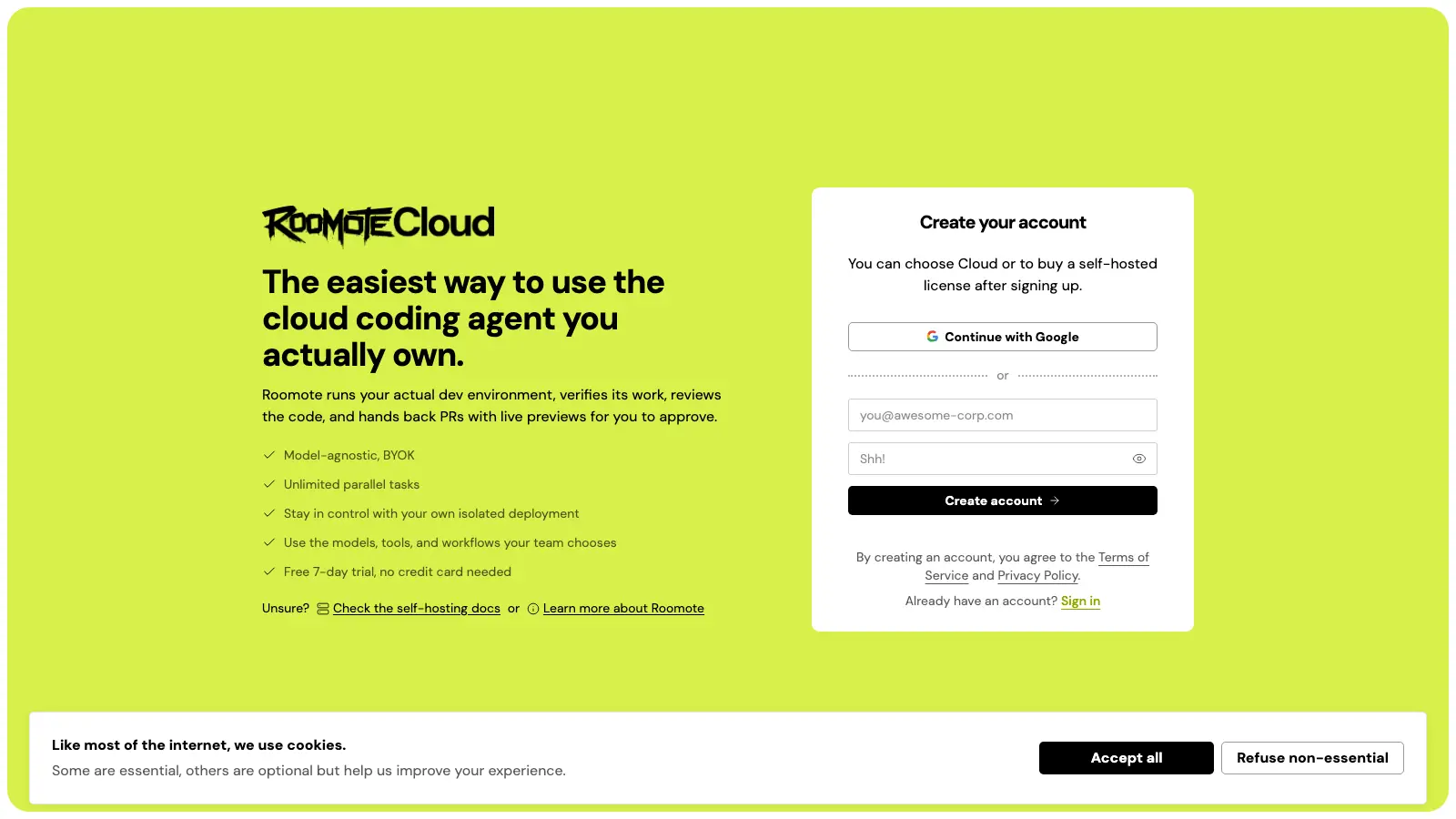
Roomote Cloud sign-up: seven-day free trial, no credit card, single-tenant instance. - 4
Or self-host it with one command
Prefer keeping the code on your own infrastructure? On a fresh Ubuntu or Debian box with 4 GB of RAM run: curl -fsSL https://get.roomote.dev | sudo bash. The installer sets up Docker, secrets and the Compose stack, then prints a setup link where you connect your chat channel, your Git host (GitHub, GitLab, Gitea, Azure DevOps or Bitbucket Cloud), a sandbox provider and your models. Railway and Render one-click templates provision Postgres, Redis and the app for you; self-hosting is free for up to 10 users.
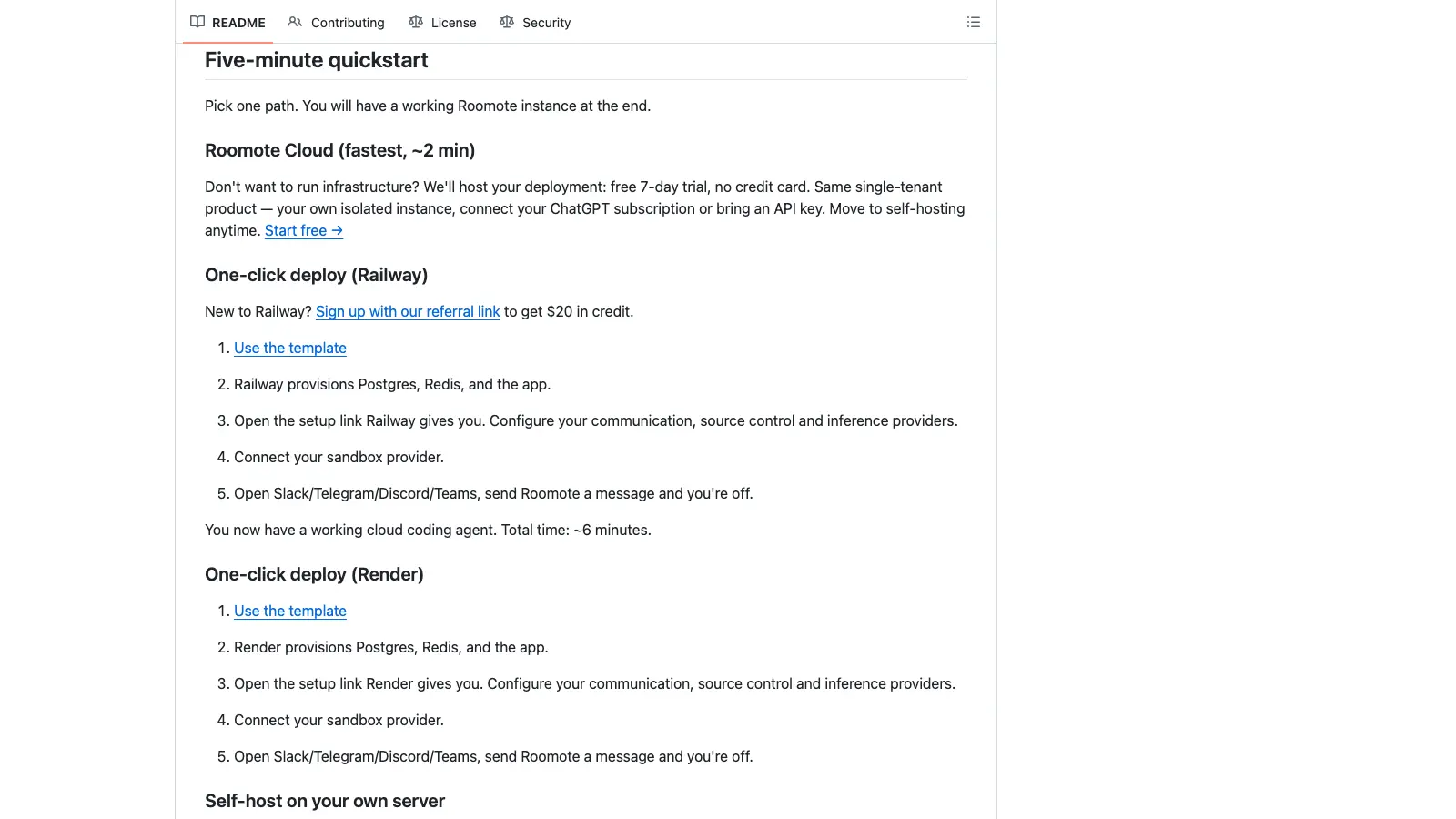
The README quickstart compares Cloud, Railway, Render and self-hosted deployment paths. - 5
Connect a model provider
Roomote ships without models — you connect them. Link a ChatGPT Plus or Pro subscription directly (no API key, no separate billing) or paste API keys under Models, Add Provider: OpenRouter, Anthropic, OpenAI, xAI, Google Gemini, Amazon Bedrock, Moonshot AI (Kimi), MiniMax, Z.AI, Together AI, Vercel AI Gateway, an OpenAI-compatible endpoint and more. There is no markup on tokens; you pay your provider directly.
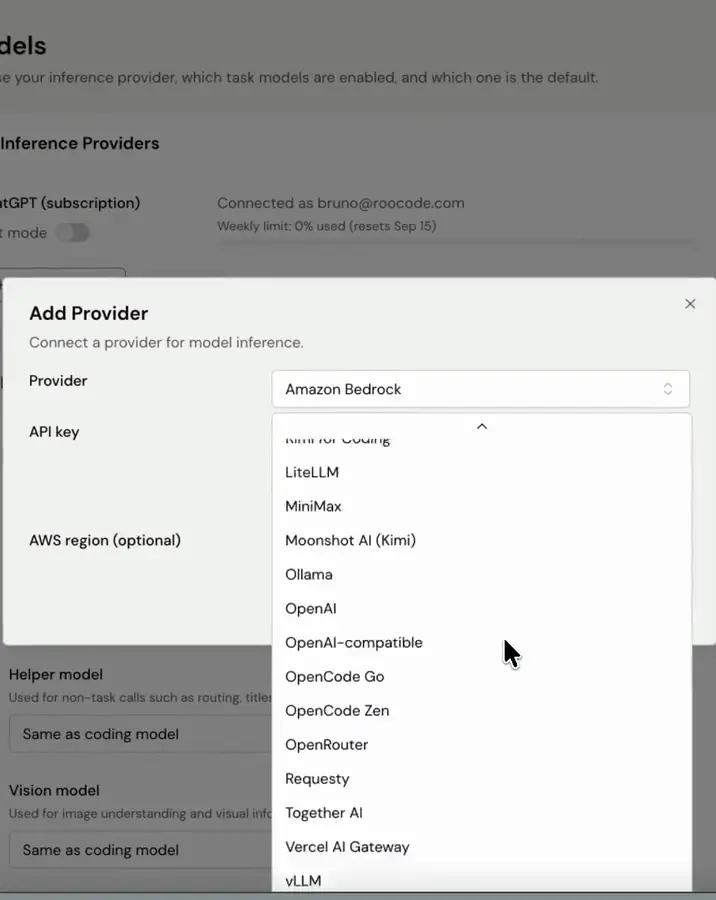
Models, Add Provider: paste a key from OpenRouter, Moonshot Kimi, Z.AI or any supported provider. - 6
Set the model mapping per role
One model does not fit every job. A mapping assigns a default coding model plus dedicated orchestration, helper, vision, code review, explore and advisor models; apply a preset such as OpenRouter Balanced or tune each slot yourself. A cheap flash model can explore the codebase while a stronger one writes and reviews — switch per task whenever it makes sense.
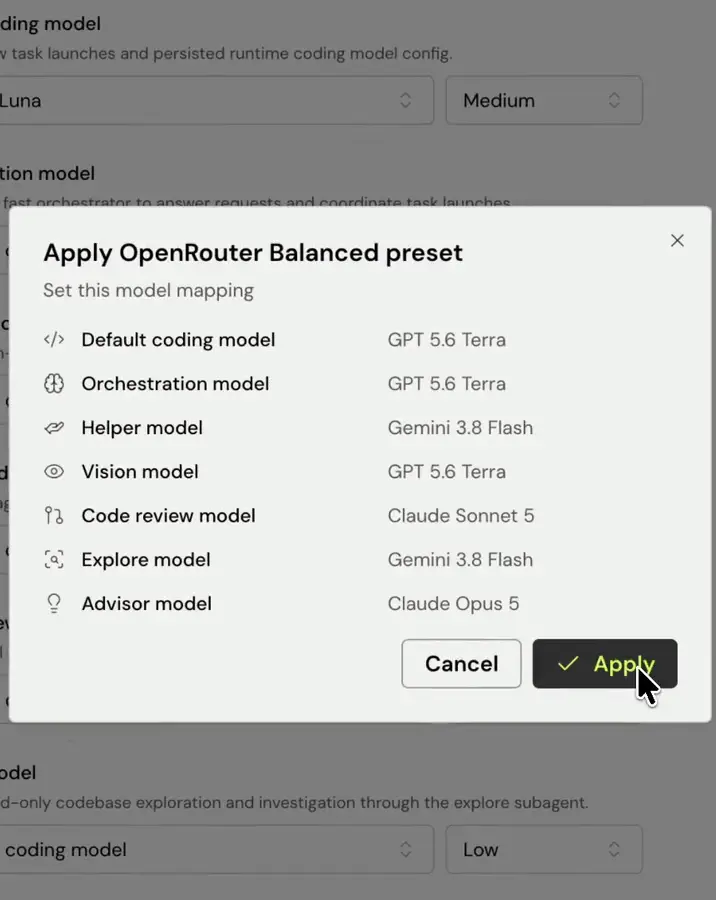
The OpenRouter Balanced preset maps coding, helper, review and advisor models separately. - 7
Send your first task from chat
Open the chat channel you connected during setup — Slack, Microsoft Teams, Telegram or Discord — and brief the work like you would brief a teammate: fix the 500 on the annual-plan billing endpoint. Roomote picks the task up, spins up a sandbox with your full repo, and reports progress in the thread. Non-engineers can assign tasks this way too; asking it to fix the typo on the pricing page is a valid brief.
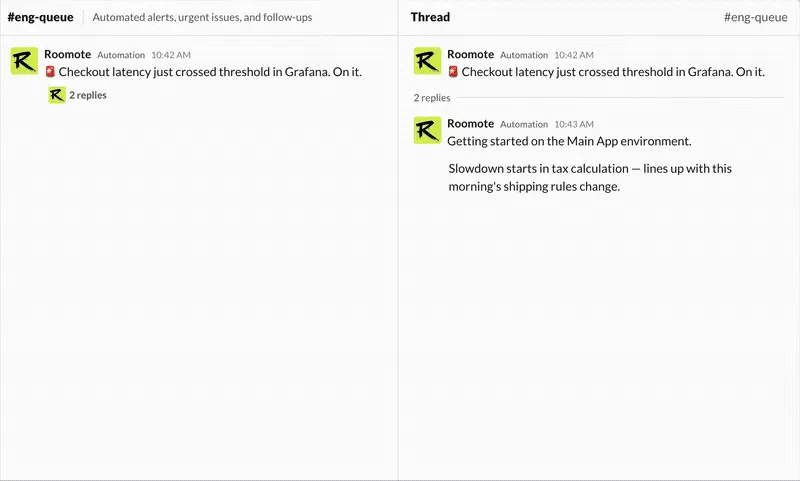
Roomote answering in a Slack thread: what broke, where it starts, and that it is on it. - 8
Let it triage alerts and issue trackers
Beyond tasks you type, Roomote listens. Connect Sentry, Grafana or PostHog and it reacts to anomalies in channel; connect Linear, Jira or GitHub Issues and it reads new tickets, asks clarifying questions and starts working, linking the pull request back to the issue. This is where the no-babysitting promise lands: the queue keeps moving while you are in a meeting.
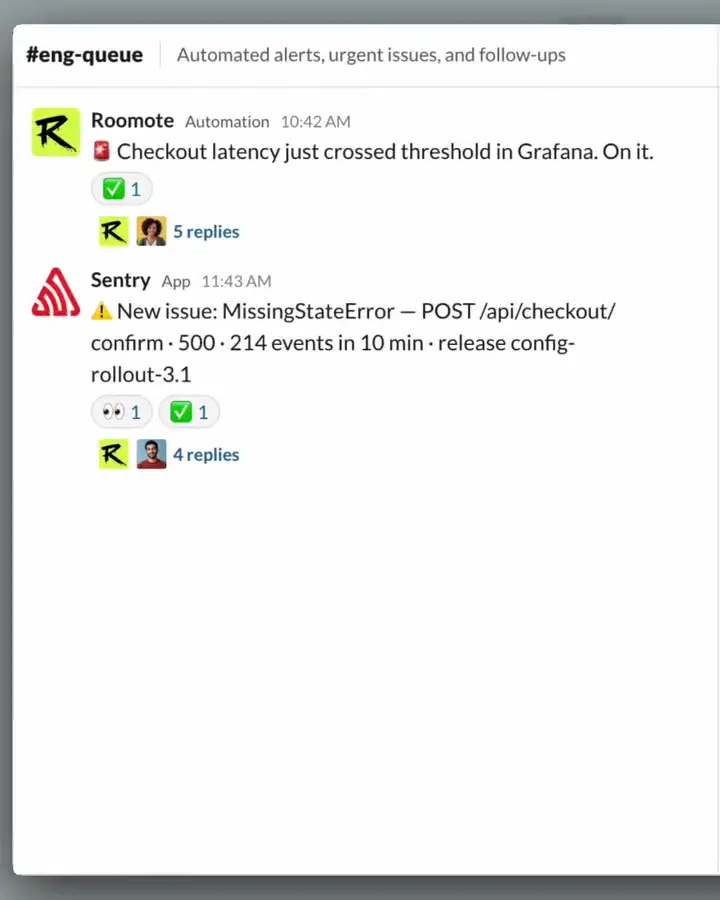
A Sentry 500 alert lands in the eng-queue channel and Roomote's automation is already replying. - 9
Follow along — or run several tasks at once
Every session is visible in the Web UI, where the whole team can read the conversation, the delegated work and the resulting PR. Sessions are independent, so you can run several in parallel across different repos, each in its own throwaway sandbox — nothing touches your local machine. Steering mid-flight is allowed: message the agent while it works.
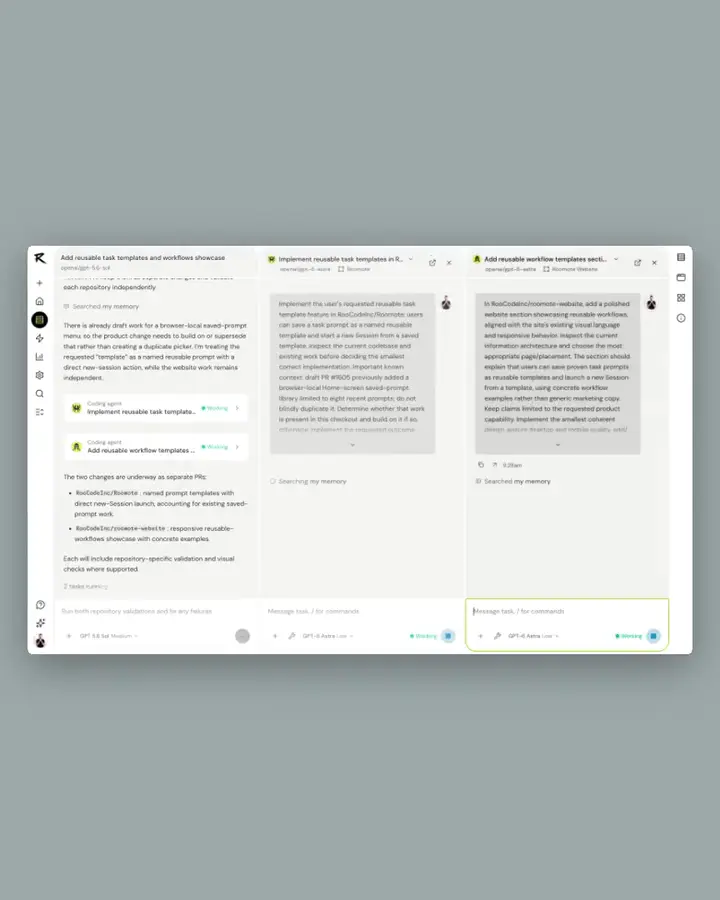
Three Roomote sessions running side by side, each with its own sandbox and model. - 10
Review the output like a teammate's pull request
When the agent finishes you get a PR with the diff, screenshots of the running app and a live preview URL to click through before merging. Every action is logged in the audit trail — which model ran, which tools were called, what code was written — and the sandbox is cleaned up afterwards. Approve, request changes, or merge.
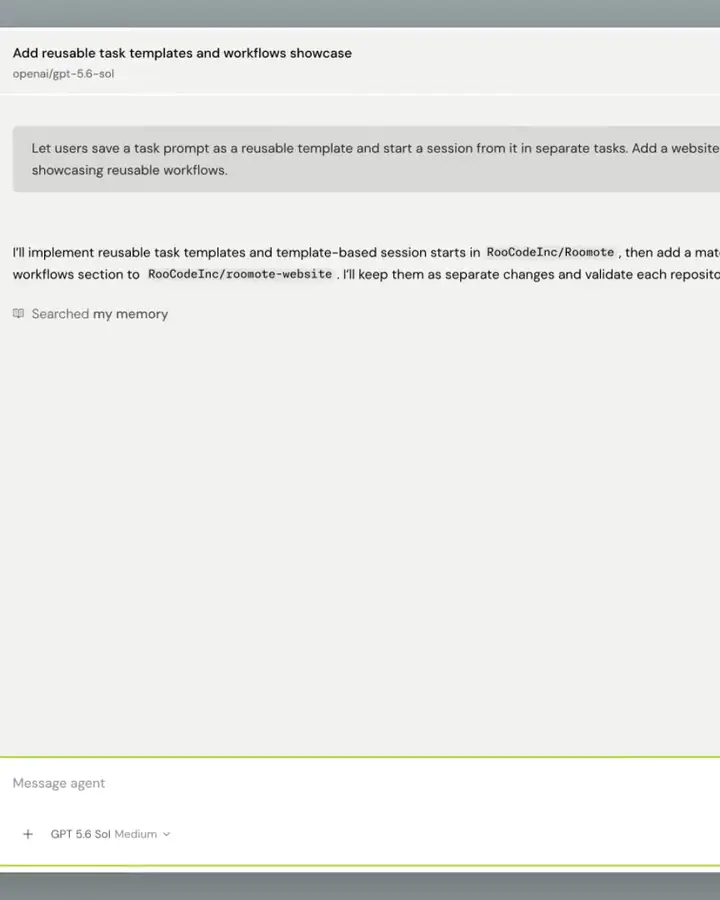
A Roomote session explaining which repos it will change and how it will validate each one. - 11
Automate the recurring work
Anything you catch yourself typing every week belongs in an automation. Give it a name and a prompt — look through last week's PRs and pick the five most interesting changes — then a schedule (daily, Fridays at nine, or custom) and a Slack channel to report into. Each run is a full session that posts its findings and failures back to the channel.
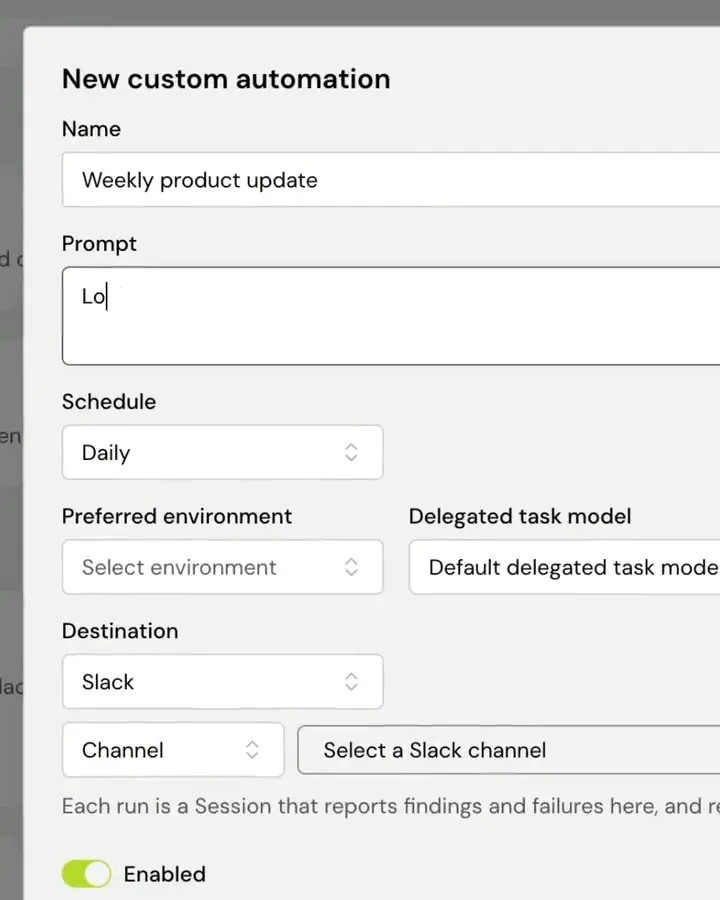
New custom automation: name, prompt, schedule, preferred environment and Slack destination. - 12
Keep an eye on spend and audit
The Costs dashboard breaks inference spend down by user, type, environment, source, provider and model, with average cost per PR, per task and per active user, plus a data export. Because you brought your own keys, these numbers line up with your provider invoice — and you can switch models per task whenever a cheaper one does the job.
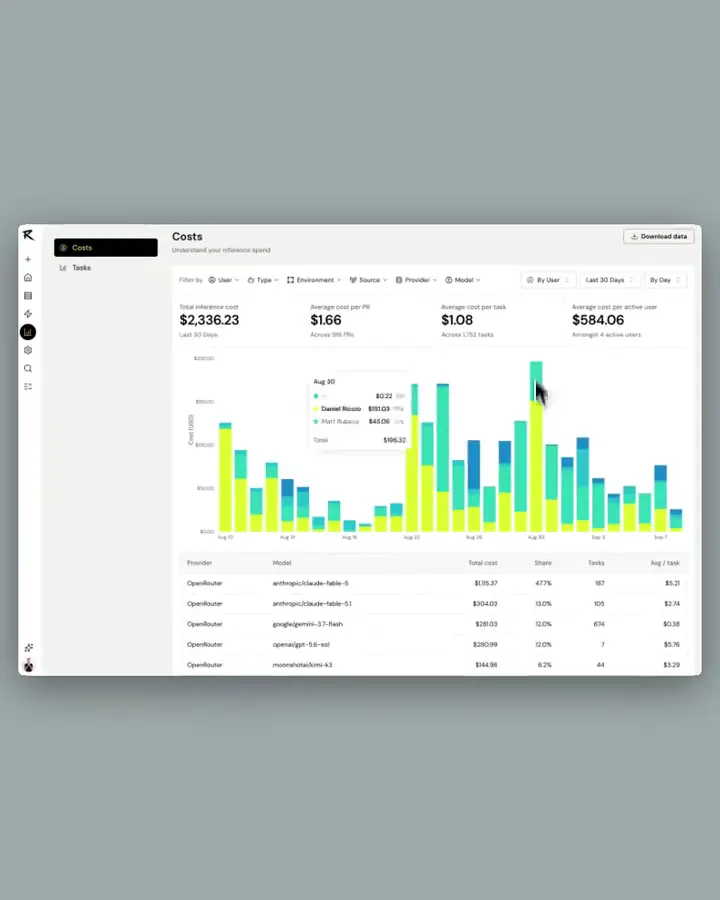
The Costs dashboard: spend by model, cost per PR and per task, exportable as data.